|
Why do we
taste wine instead of just drinking it ?
To
better appreciate it’s qualities, to assess whether the wine
is drinkable (like when the waiter pours a little of the wine
you ordered into your glass for you to taste at a restaurant),
and to be able to identify typical aromas and tastes of certain
wines so you can see if you like them (and to help you remember
which ones you liked when you next shop for wine). The more you
know about any subject that is complex (like wine, music, art,
etc.), the deeper your understanding and the more lively your
enjoyment. Wine should first and foremost be a pleasure, and
wine tasting should be fun and add to your pleasure in drinking
wine. A good wine taster will be able to rely on his or
her palate to determine the quality of a wine, rather than being
influenced by a wine's notoriety, rating or price.It’s important to set the stage
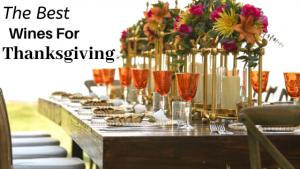
for a group wine tasting.
The room should be
brightly lit, so you can clearly see the wine in the glass. You should
use clear glasses (never colored) that are designed for wine
tasting: they should close in toward the top to concentrate the
aromas. The room should be free of smoke and other smells that
could distract from the smells of the wine (tell your guests to
not wear perfume that day!). Place a white tablecloth on the
tasting table – this helps you accurately assess the color of
the wine. Put some bread on the table if people want to cleanse
their palates between wines, although this is not really
necessary. Provide paper and pencils so everyone can note their
impressions of the wine. Pour only a small amount of wine in
each glass, about a third full is enough. Provide some
recepticles (like wine buckets) for those who wish to spit out
the wine instead of swallowing it during the tasting (this is
perfectly acceptable behavior – all wine professionals do it).
Spitting will allow you to taste more wine, since you won’t
get the effect of the alcohol.
Choose three wines for your first
wine tasting: start with a white, then two reds.
Some easy wines to start tasting with are Beaujolais, white
wines like Sancerre or Chablis, or a Côtes du Rhône - they
have typical aromas that are usually easy to recognize. You'll
be able to taste three wines without becoming saturated; as you
get more experience, you can increase the number of wines you
taste in one tasting session.
A couple of ground rules to remember :
-
It’s best NOT to drink water between glasses of wine (unless
you’re really thirsty) – water rinses the mouth too
clean, and can leave a taste of chlorine or bleach in your
mouth. It's not necessary to rinse your glass between wines
of the same color, but do rinse if you change from red to
white wine, so as not to tint the color of the white wine with
the leftover drops of red wine;
-
Hold the wine glass by the foot or the stem, never the
bowl of the glass. If you hold it by the bowl, you cannot
see the wine, and you will also heat the wine, which will
change it’s characteristics.
-
Taste silently and note your impressions. You’ll share
them later with your colleagues, but for now you don’t
want to be influenced by their reactions, you want to note
YOUR reactions. Trust your initial reactions, they are
usually the most accurate.
-
Use simple words. Leave the snobby wine jargon for the
snobs.
-
There are NO wrong answers ! Everyone has their own
perceptions, and there is usually a good reason if you come
up with an aroma or a taste that no one else came up with.
Go with your gut, and know that the more you taste, the more
precise your responses will become.
There are
three basic steps to tasting wine :
-
The Look of
the wine
-
The Smell of
the wine (also called the Nose)
-
The Taste of
the wine
and the
culmination of the tasting: The Evaluation of the Wine
1.
The
Look
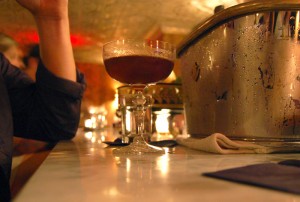
Hold the glass up in front of your eyes, and tilt it
slightly. Try to come up with a name for the color you
see. The color of the wine can tell you something about its age,
where it comes from, and its concentration. Young red
wines are the color of the grapes themselves: violet- or
ruby-laced red. As they get older, they become true red,
and then orangey or even brownish-red. White wines are
generally a light straw or golden color, becoming deeper yellow
as they age, and turning toward amber when they're really old.
Here are the typical colors of red, white and rosé wines :
-
Red : ruby red (pinkish), violet-colored
(dark and purpley), garnet red (orangey), brick red (burnt, orangey
red, for older wines)
-
White : pale straw yellow, straw yellow, pale golden
yellow, green-tinted pale golden yellow, golden yellow, deep
yellow, amber-tinged yellow,
amber (these last two are usually for older white wines, sweet white wines
in particular take on these colors as they age)
-
Rosé: grey (the lightest possible pink or orangey tint), onion
peel (light orangey), salmon (pink with an orange tint),
orange with a pink tint, deep
raspberry pink, light red, light pink
Try also to ascertain the depth or intensity
of the color. Wines from northern, cooler climates tend to
be lighter in color (color not as intense) as wines from hotter,
southern climates. Quality wines are more concentrated due
to picking at optimum ripeness and low grape harvest yields, and
will often be darker in color as a result.
Note the color of your wine and its intensity on your
paper.
Now ascertain whether the wine is transparent. Winemakers these days
work hard to make their wines as transparent and brilliant (reflective)
as possible as this is the preference of the modern consumer. If
the wine is not transparent (cloudy), or is kind of matte
rather than brilliant, these can be signs that the wine was
either not filtered (which isn't a defect), or has some kind of bottle
sickness (which is a defect). Some winemakers choose not to
filter their wines. Wines left deliberately unfiltered are,
of course, drinkable ; sick wine, on the other hand, should not be
drunk.
From the look of the wine, we can tell something about it’s
age, the grape variety (chardonnays tend to have a greenish
tint, for example), where it was produced, and get the first indications of whether it
is still in good shape and drinkable.
2. The
Smell (the Nose)
-
The First Nose :
as soon as the wine is poured into the glass, stick your
nose into the bowl of the glass and smell it (yes, your nose
needs to be INSIDE the bowl of the glass, not just at the
rim !). Usually, this step comes before the
Look. Take several small sniffs rather than a large
one – a large sniff gives your brain too much information,
and you become quickly saturated. The first nose will give
you the very first impressions of the aromas of the wine.
These first aromas are the most volatile, those that escape
easily from the wine. Trust your first reactions, don’t search too
hard. Try to identify families of aromas rather than
specific aromas: words like "fruity"
or "floral" are sufficient at this stage.
-
The Second Nose :
swirl the wine in your glass (an easy way to do this is to
put the glass on the table, hold it by the foot and make
circular motions with your hand). If the wine glass is the
right shape (tapered toward the top), the wine will not come
out of the glass as you swirl it ! Once again, put your
nose into the bowl of the glass and take some small sniffs.
If you become saturated and don’t smell anything after a
time, take a whiff of the air in the room to cleanse your
nasal receptors and then sniff the wine again. The swirling
aerates the wine, releasing more of its aromas (those that
are less volatile). In French, we say that at this stage, "le
vin fait la queu de paon" - the wine opens the
peacock tail", meaning that the beauty of the aromas
are opened up to be enjoyed. Try now to
identify more specific aromas. Wine usually smells like
anything except grapes. Most often it smells like other
fruits, or like flowers. It can also have grilled/toasted
smells (often from oak aging), smells of gasoline or tar,
vegetable smells, forest floor smells like mushroom or ferns,
animal smells like leather or wet fur, or smells from other
families of aromas. If you’re new to wine tasting and you
can only identify the families of aromas
(fruit, grilled/toasted, vegetation),
that’s fine. Otherwise, see if you can let your
imagination go and "free-associate" with your
memories of smells you’ve come across in your lifetime.
Note these impressions on your paper. Remember, there
are NO WRONG ANSWERS!!
The Nose provides us with even more information about the
wine. First of all, we look for off-odors that indicate a defect
in the wine, like the corked smell,
or smells of rotten apples, vinegar, or mustiness. We also
look for sweet smells
like port or madeira that could indicate that the wine has become
oxidized. If we find these smells, the wine is defective and
should be sent back. We also look for signs of quality from
the Nose. A quality wine is usually aromatic. The more complex
the aromas (the more families of aromas represented), the higher
the quality of the wine. Certain aromas, like those of leather
and other animal smells, can be a result of the advanced age of
a wine, and can give you a hint as to the age of the wine.
Aromas of vanilla, caramel, licorice or oak can tell you if the
wine has been aged in oak barrels. Adding the aromas of the wine
to the color gives you the beginning of a profile of this wine,
which will help you identify it in the future, buy it again if
you like it, and help you determine if it will go with the food
you’re serving.
3. The
Taste
There’s a technique for this part as well. Take a small
amount of wine into your mouth. First, "slurp" or
"trill" the wine by taking air into your mouth along
with the wine in a slurping action (putting your tongue lightly
against the inside of your top front teeth helps, too). This
once again aerates the wine, which releases more of the aromas.
Then "chew" on the wine, which will help it coat
all the nooks and crannies of your mouth. Finally, either
swallow the wine, or spit it out. If you're going to be
tasting a number of wines, your judgment will remain clearer if
you spit rather than swallow!
How can you smell aromas once the wine is in your mouth ?
You actually can smell aromas better through your mouth than
through your nose. At the back of the mouth, there is a
passageway that leads directly to the spot high in the nasal
cavity that contains your smell receptors that inform your brain
of what you are smelling. It’s a much more direct route to
these receptors than through your nose, where long, winding
canals lead up to the receptors. This effect of smelling through
your mouth is called retro-olfaction, and it’s very important
in wine tasting. After you have swallowed or spit out the wine,
see if you can find more aromas than you had found by smelling
with your nose, and note these aromas. Then compare the aromas
you found with your mouth with those you found with your nose,
and see if they are similar. If the aromas are basically the
same, this is a sign of a well-made wine. If they are different,
this can be jarring and therefore unpleasant, and thus possibly
a sign of low quality.
Now take another sip of the wine, slurp and chew it, and
swallow it or spit it out. This time, you’re going to try to
identify the tastes of the wine. White wines have
three main taste components : acidity, alcohol, and
"moelleux" or "gras", which translates to
fatness/richness/smoothness. Red wines have these three
taste components, but also a fourth, astringency, a result of the tannins in the
wine. You’ll feel the acidity of the wine at the sides of your
mouth next to your tongue where your salivary glands are located :
a wine with a good acidity will make you salivate. The alcohol
gives a sensation of heat in your mouth, and in your throat when
you swallow it. The fatness is a sensation of unctuousness,
roundness and fullness in the mouth. Astringency is a feeling of
light dryness, pungency or "puckery" quality felt
mostly in the middle of the tongue and in the cheeks. Note the
degree to which you perceive each of these flavors. You can use
a scale of 1-5 if you wish, with 1 being the lowest degree and 5
being the highest.
What’s most important about identifying the tastes of the
wine is finding the balance
between them. In a good quality wine, no one taste will
dominate. They will exist harmoniously together, enhancing each
other rather than fighting with each other. A well-balanced wine
is a quality wine.
And finally :
The Evaluation
You have one step left in your wine tasting. Take one last
sip of the wine, slurp it and chew it, and then swallow it or
spit it out. As soon as the wine is no longer in your mouth, try
to determine how long you still perceive the AROMAS (not the
tastes) of the wine. Count off seconds in your head ("one
mississippi, two mississippi", . . .), until you no longer
perceive any aromas (the seconds are called "caudalies"
in wine lingo). This is known as the persistence
of the wine. In a quality wine, you will perceive the aromas for
many seconds after it is no longer in your mouth. A wine whose
aromas last less than 4 seconds in the mouth is considered to be
"short" in terms of persistence ; 4-6 seconds
is "medium", and a wine lasting 7-12 seconds is
considered "long". Grand Cru wines generally have a
long persistence.
Look over your notes, and try to come to a conclusion about
this wine. Did it have a pleasing color, and was it transparent
and brilliant to the eye ? Was it aromatic ? Were the
aromas pleasing and complex ? Did you find the same aromas
when the wine was in your mouth as when you smelled it with your
nose ? Were the flavors of the wine in balance ? Did
it persist a long time on your palate ? Finally, DID YOU
LIKE IT ? This last judgment is strictly personal, and has
nothing to do with objective quality and everything to do with
whether you’re going to buy and drink this wine in the future.
Give the wine a score based on your objective analysis: use the same 1-5 scale if you like.
You might want to give a second score for how much you liked
it. Save your wine tasting notes for your future reference, for meal
planning and making purchases.
With practice, these wine tasting steps become second nature
and you can go through them very quickly. If you’re like me,
you’ll end up slurping and chewing all of your beverages, even
water !
Once you've mastered the basics of wine tastings, take a look
at our Advanced Wine Tasting
Topics to broaden and deepen your wine tasting skills and
vocabulary.
Try to "taste" your wine instead of just
"drinking" it from now on. You’ll get a greater
enjoyment from your wine and sharpen your skills as you go
along. Who knows, you may end up being the next Robert
Parker !
© 2007 Lauriann Greene. All
rights reserved.
For an excellent article by Matt Kramer on what
makes a good wine taster, please go to:
http://www.winespectator.com/Wine/Main/Feature_Basic_Template/1,1197,1355,00.html
Back
to Wine
Articles Index
|